
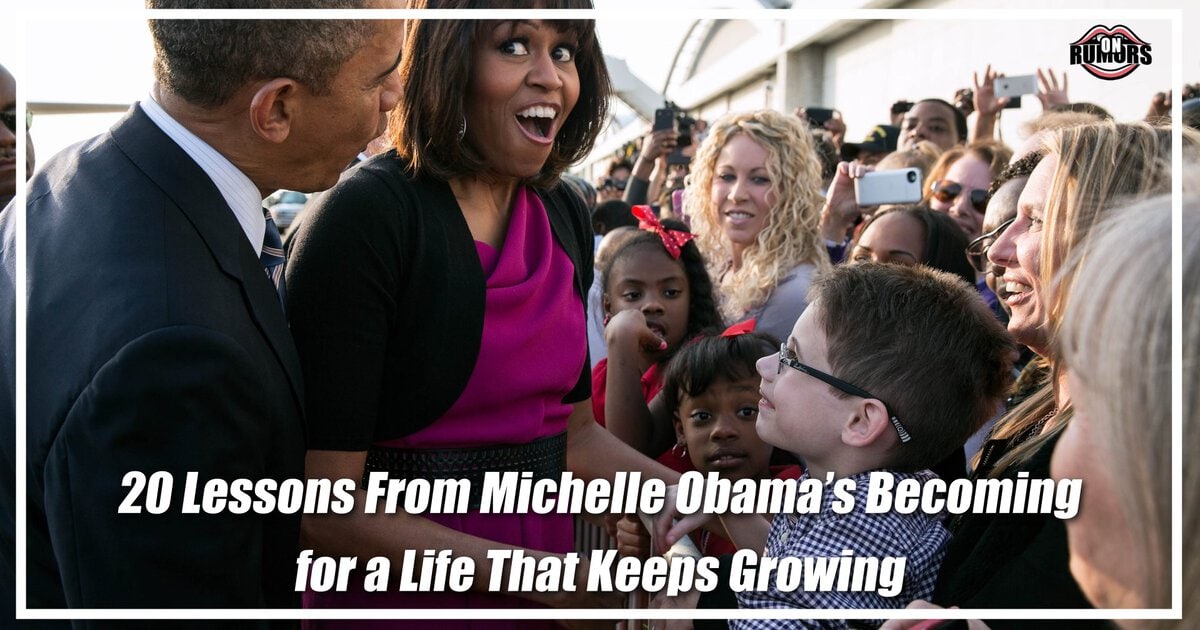
In Becoming, Michelle Obama writes about much more than life in the White House. Her memoir follows a girl from Chicago as she figures out what she wants from work, marriage, motherhood, and the increasingly public life she didn’t originally plan.
One reason the book feels so personal is that achievement doesn’t settle every question. Obama can be accomplished and unsure, grateful and frustrated, confident in her abilities and hurt by what strangers say about her.
These 20 reflections draw on the book’s themes. They are paraphrases and reading takeaways, not direct quotations or a list of rules Obama wrote for readers.
Love Requires More Than a Promising First Impression
1. Look beyond appearance and financial prospects
Good looks and a promising career can make someone seem like a great match. They tell you much less about how that person handles a difficult conversation. Obama recalls noticing Barack’s willingness to talk about his fears and vulnerabilities. Being able to speak honestly mattered more than hoping that problems would work themselves out later.
2. Choose someone who makes room for your voice
Obama wanted a life that included her own opinions, interests, and ambitions. She saw room for those things in her relationship with Barack. The lesson is a practical one: notice how a partner responds when you want something different. Respect for your individuality should already be part of the relationship, not something you’re waiting for marriage to bring.
3. A happy marriage still needs renewal
You can love your spouse and find marriage frustrating. Obama’s reflections leave room for both. Staying together involves returning to the relationship as circumstances change, sometimes through a serious conversation and sometimes through an ordinary decision to show up for each other. A happy marriage still needs attention.

Ambition Works Best With Perspective
4. Give inspiration something practical to stand on
Feeling inspired is a beginning. What comes next is usually less exciting: making time, practicing, asking for help, and doing the work again. Obama’s emphasis on effort gives enthusiasm somewhere to go. If an idea moves you, decide on one thing you can actually do with it.
5. Put your energy where you have influence
Determination won’t give you control over every circumstance. It can help you decide where to put your attention. Rather than trying to manage everything at once, separate the choices you can make from the outcomes you can’t guarantee. That leaves more energy for the work in front of you.
6. Effort does not promise a favorable result
Hard work can improve your chances without ensuring that things go your way. Obama acknowledges that uncomfortable truth. A disappointing result isn’t automatically evidence that you lacked discipline or wanted something too little. Sometimes you did your best and still didn’t get what you hoped for.
7. Keep moving even when criticism continues
Waiting for everyone to approve of you can become a long wait. The people Obama describes as successful have learned to keep working while criticism continues. Trusted friends and supporters help them remember what matters. You don’t have to give every outside opinion the same weight.
8. Notice when approval becomes a constraint
Being seen as dependable or successful feels good. It can also make changing direction surprisingly hard. You may keep following a familiar path because people admire it, even after you’ve stopped wanting it. Ask whether you’re choosing the next step for yourself or protecting a version of yourself other people prefer.
Make Room for the Parts of Life You Cannot Solve
9. Grief can change the most ordinary moments
Loss doesn’t stay neatly separate from the rest of the day. Obama describes how it can enter familiar routines: getting dressed, eating, hearing music, or seeing something beautiful. The world may look much the same while your experience of it has changed. That helps explain why ordinary days can feel so difficult after a loss.
10. Fertility does not follow an effort-and-reward equation
Obama’s account of fertility difficulties challenges the belief that working harder will solve everything. Some experiences don’t respond to determination in a predictable way. For someone used to setting goals and meeting them, that can be especially painful. Difficulty conceiving isn’t a verdict on how hard someone has tried.
11. Motherhood has no universal formula
There isn’t one correct way to be a mother. Obama’s reflections offer some relief from the pressure to find it. Families differ, needs change, and advice often conflicts. A choice that suits another household may not suit yours. Parenting requires attention to the people involved, not just obedience to a formula.
12. Greater freedom can bring greater exposure
A new opportunity can feel exciting and unsettling at the same time. Having more freedom may also mean taking risks or being seen in unfamiliar ways. Those mixed feelings don’t cancel out the value of the opportunity. You can welcome a change while admitting that parts of it make you nervous.
Understanding People Starts With Looking More Closely
13. A struggling child needs more than a label
Obama asks readers to consider what lies behind a child’s behavior, including whether adults have made that child feel valued. Calling someone difficult tells us little about what they need. Before settling on a label, ask what has been happening around them and what support may be missing.
14. Kind treatment matters
Her generous view of people begins with how we approach them. Patience and basic consideration can make a conversation possible where suspicion would close it down. That doesn’t mean ignoring harmful behavior. It means giving people room to show you more than your first impression of them.
15. Familiar frameworks shape our choices
We often build our plans from the lives we’ve already seen. That can be helpful, but it can also limit what we consider possible. A familiar route isn’t necessarily the only sensible one. Notice whose example you’re following and whether it still fits the life you want.
16. Confidence does not make everyone respond alike
Obama describes how differently she and Barack responded to political scrutiny. His experience helped him take rumors and misperceptions in stride. She was still learning to live with strangers judging her, even though she already knew herself to be capable and accomplished.
She connects that discomfort to the child who worked hard, aimed for perfect attendance, and valued approval. Doing things properly had seemed like a way to avoid being misunderstood. Public life showed her that effort and good intentions couldn’t guarantee a fair reading.

Your Identity Is Still Unfolding
17. Growing up is not a final destination
Asking a child what they want to be can make adulthood sound like a job title you eventually arrive at. Obama’s perspective is broader. Choosing a career doesn’t finish the work of knowing yourself. Your interests, priorities, and sense of purpose can keep changing long afterward.
18. Claim your story, including its imperfections
Your history doesn’t have to look impressive from every angle. The awkward choices and unfinished chapters belong to you, too. Owning them means acknowledging what happened without needing to turn it into a polished success story. You can be honest about the past and still choose what comes next.
19. Recognize the strength in speaking
Finding your voice is one of the book’s central themes. Speaking can mean asking a question, naming a concern, or offering a perspective others haven’t heard. You don’t need to wait until you feel completely certain before contributing. What you have experienced may matter to someone else.
20. Keep becoming, rather than waiting to arrive
The title offers a useful way to read the whole memoir. A milestone can matter without completing your life. There will still be things to learn, beliefs to reconsider, and relationships to tend. You don’t have to reach a finished version of yourself before taking your present life seriously.