
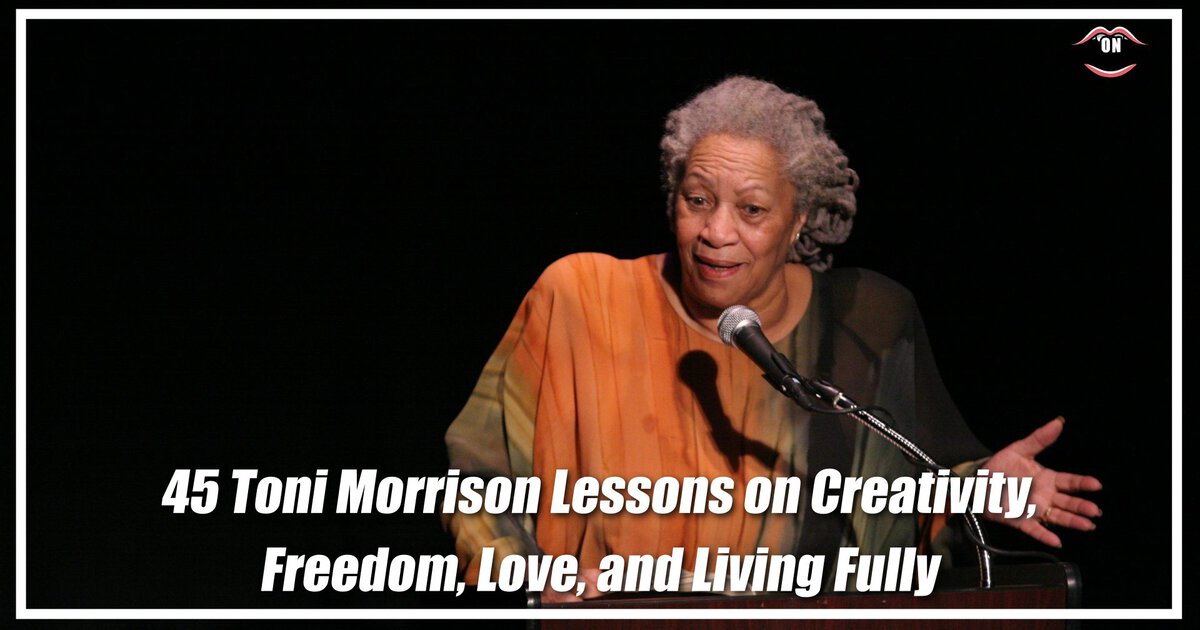
Toni Morrison’s writing asks a lot of its readers. Her characters can be tender, difficult, loving, and destructive, sometimes within the same scene. She gives us plenty to think about without tidying human life into easy answers.
The Nobel laureate and Pulitzer Prize winner explored the Black American experience, the weight of history, and the ways people struggle to belong to themselves. Those concerns reach well beyond the page.
These 45 reflections are a reader’s takeaways from themes in her fiction and commentary, expressed in our own words. They aren’t a collection of quotations or rules Morrison prescribed. Where a particular passage or interview is discussed, its source is identified.
On writing and imagination
- You can learn the craft of writing. Your way of seeing will develop through the attention you give to the world and the work.
- Let language make room for a thought instead of squeezing it into a phrase you’ve heard a hundred times.
- Your own experience is a starting point, not the outer edge of your imagination. Curiosity gives you reasons to look further.
- Listen to feedback, but notice when you’re changing a piece simply to make it more comfortable for someone else.
- A good story can help an unfamiliar life feel close. It can also make you question something you thought you understood.
- The book you wish you could find may offer a clue about the story you want to write.
- Pay attention to your own interest as a reader. What would keep you turning the pages if this weren’t your work?
- Ideas don’t always arrive at a desk. Keep a way to record them when an ordinary journey or quiet moment helps something fall into place.
- A story can show readers something painful without telling them exactly what to think. Leave room for their response.
- Writing can help you work out what you think. You don’t need to know the answer to every question before beginning.
- Giving a difficult experience a shape on the page may help you examine it. The story doesn’t have to resolve every feeling it raises.
- Making a living matters. So does knowing which part of your work you would still care about without applause.
- A first draft can surprise you. Let it show you what the idea might become before deciding what it must be.
- Notice the subjects that make you curious enough to keep working. That interest can sustain you when the writing gets difficult.
- Art belongs to the world around it. Even a private story can raise questions about who has power and whose life gets heard.
- Look closely at what others pass over. A gesture, a silence, or an ordinary room can carry more than an explanation.
- Creative work and family life can both matter deeply. Morrison described writing before her children woke; a workable routine may grow from necessity.
- Don’t wait for perfect conditions. In her Paris Review interview, Morrison described fitting writing around work and other demands, with ideas sometimes recorded wherever she happened to be.

On freedom, courage, and self-knowledge
- Freedom asks something of us. It can mean learning how to move through a world that doesn’t always make space for us.
- Ask what you’re carrying because it matters and what you’re carrying because you’ve never considered putting it down.
- Some beautiful moments are worth experiencing without trying to keep them. You don’t have to capture everything for it to count.
- Question the labels other people give you. Their description may reveal more about their assumptions than about your life.
- Anger can demand so much attention that it leaves little for action. Ask what you want to do with what it is telling you.
- If an opportunity has opened your world, consider how you could help open a door for someone else.
- Your worth is not exhausted by what you give to others. In Beloved, Paul D tells Sethe, “You your best thing, Sethe. You are.” The words belong to a character speaking to someone who struggles to see her own value.
- Loneliness isn’t always something a person has chosen. Exclusion and other people’s judgments can make it harder to belong.
- Feeling angry about an injustice can reveal what you believe people deserve. Give that feeling a direction you can live with.
- Being free includes having room for your own desires, attachments, and choices, even when others don’t understand them.
- A desire to control another person can come to govern the controller’s life as well. Domination leaves little room for an honest relationship.
- Imagination helps us question inherited limits. It allows us to consider a life beyond the one we’ve been told is possible.
- Be careful with power over someone else. Their dependence doesn’t erase their dignity or their right to a voice.
- Avoiding a difficult truth may give temporary relief. Understanding your life often means finding a way to face what you’ve been leaving out.
- Allow people to be complicated. A simple label can make a story easier to tell while making the person harder to see.
- The way adults treat children matters, including the moments no one discusses afterward. Silence doesn’t tell us that a child was unaffected.
- You can acknowledge grief, anger, or confusion without apologizing for failing to look happy. Those feelings are part of a life, too.
- Notice when fear is doing the deciding. Sometimes what looks like agreement is a person’s attempt to remain safe.
- Start with what you can change. When something is beyond your reach, you can take time to understand it without blaming yourself for not fixing it.
- History remains present in families, institutions, and the choices available to people. Learning it can change how you understand what is happening now.
- Life’s uncertainty makes it difficult to plan and easy to take for granted. Give some attention to the life you’re having while you can.
- Language carries human experience beyond a single lifetime. Morrison’s Nobel lecture asks us to consider our responsibility for how words are used and what they make possible.
- Question the stories that tell you there is only one acceptable kind of beauty or one shape a loving life must take.
- Beauty can be something you do: an act of care, a thoughtful creation, or the attention you give another person.
- When a large “why” feels impossible to answer, looking carefully at what happened may offer a place to begin.

On love and self-respect
- Calling something love doesn’t tell us how it feels to receive it. Look at the care, freedom, fear, or harm that comes with it.
- Loving someone should leave room for a self of your own. Your identity, dignity, and choices still matter inside a relationship.
You may agree with some of these reflections and want to argue with others. That is a good reason to return to Morrison’s books. A list can offer a starting point; the characters, voices, and difficult questions in the work offer much more.